While a well-appointed room, gorgeous views, plush robes or a hot tub are common parts of a luxury travel plan, they’re not the only reason why people book a high-end hotel. It’s also the personalized service and memorable moments between check-in and checkout that make all the difference. And with tech-powered luxury hotel guest experience enhancements, these high-touch service moments are easier to offer than ever.
As you set out to evolve your property, this guide offers a roadmap for how to enhance the guest experience in luxury hotels. We explore just what it takes to craft those unforgettable stays that are desired from afar and remembered forever.
Key Takeaways
A luxury hotel experience is a detail-oriented approach to hospitality that prioritizes personalization, privacy and elevated service at every turn.
Modern luxury hotels are redefining service by automating tasks to free up time for meaningful interactions with guests.
A luxury hotel experience is a hospitality approach that offers elevated service at every touchpoint. It can look like higher-thread-count sheets, chauffeur service from the airport, an extended checklist of amenities or a plethora of other options.
As discretionary spending on recreational experiences increases and technology progresses, luxury has become more about the intentional orchestration of comfort, emotional fulfillment and deeply personal service. In his book “Unreasonable Hospitality,” Will Guidara emphasises intention: “Intention means every decision, from the most obviously significant to the seemingly mundane, matters.”
Today, the luxury hotel experience reflects modern priorities: mobile-first convenience, seamless digital communication and stays that feel genuine and unforced. From frictionless check-in to in-room tech and intuitive service, the best luxury hotels blend tradition with innovation to craft stays that are both timeless and refreshingly modern.
How to Create a Luxury Hotel Experience
The path to creating a luxury hotel experience is different at every property. For existing hotels, working towards a luxury experience may require unlearning old habits, reshaping operations and embedding new standards until they become second nature. It demands discipline, creativity and often more updating than starting fresh.
But no matter where you are, crafting a luxury hotel experience means designing every moment to feel intentional. It’s achieved through a thoughtful interplay of anticipation, personalization and subtle cues that make every interaction feel bespoke.
Take Travel + Leisure’s “World’s Best Hotel” two years running, Nihi Sumba. Set on a remote Indonesian island, the hotel embraces Sumba’s heritage of bareback horseback riding through the surf and pairs it with an immersive spa experience (hike included). Every touchpoint is rooted in place, purpose and story, and offers an unmatched sense of local authenticity. Here are some key ways every hotel can achieve the same feel:
Personalization Through Data and Insight
Your head concierge is already one of your top assets, and today’s technology acts as their sophisticated companion. By gathering guest insights across the digital journey, technology gives you information from the moment a guest begins browsing rates to the instant they message your team. Each interaction quietly adds to a richer understanding of who they are.
And that’s what guests want: 76% of customers are happy to share their data for personalization, according to McKinsey. These insights, which would be impossible to track manually, allow hotels to tailor the stay without ever having to ask twice. It creates the sensation that the hotel understands the guest in an understated, elegant and unmistakable way. With the right tools, hotels can:
Pre-load returning guest preferences into arrival notes
Tailor upsells based on stay history, booking patterns or known interests
Personalize email and pre-arrival messages around guest intent, whether it’s leisure, business or celebration
Send thoughtful, contextual post-stay follow-ups that reflect the stay
Empowerment and Training for Staff Excellence
How your team responds to guests makes all the difference between good and exceptional service. Sure, it comes from who you hire, but the rest comes from how you train them and the freedom you give them to act. The Ritz Carlton’s famous standard, empowering staff to spend up to $2,000 per guest per night to resolve any issue, is a powerful symbol of trust. It signals that great service isn’t scripted — it’s empowered.
Managing hotel staff with a focus on empowerment elevates service and transforms routine interactions into moments of genuine care. To do this, hotels can:
Implement mobile tools that reduce front desk friction
Use real-time messaging to coordinate service fluidly across departments
Offer scenario-based training that prepares teams for high-stakes guest moments
Reinforce a service culture that rewards proactive problem-solving and celebrates thoughtful initiatives
Curating Emotionally Resonant Experiences
Offering moments of real meaning comes by understanding what guests truly care about and what sits at the core of their trip. It’s about tapping into the “why” behind the reservation.
When every touchpoint is curated with intention, guests leave both satisfied and emotionally connected to your brand. Some examples of this include:
Leaving an in-room note referencing a prior conversation
Replacing a favorite minibar snack when it runs out
Leading with “We noticed that…” in your communication
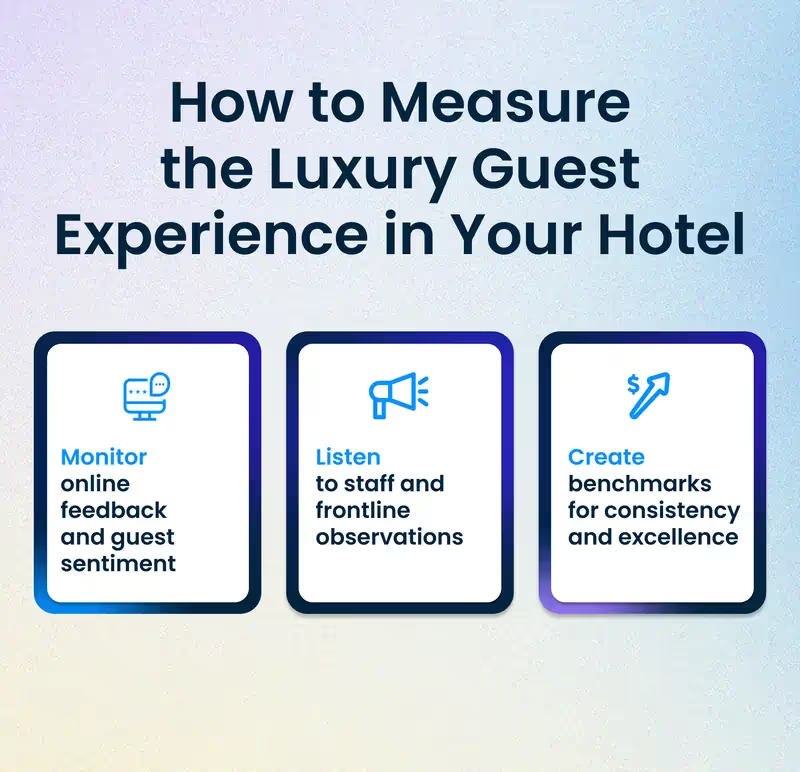
How to Measure the Luxury Guest Experience in Your Hotel
The reason the world’s best hotel lists evolve so fast? Guest expectations shift. Tastes refine. Luxury is ultimately a feeling, which requires more than traditional KPIs.
To measure the luxury guest experience in your hotel, you must track both perception and satisfaction across the entire journey. In practice, this means marrying hard data with soft signals. And in the next points, we’ll show you exactly what that looks like in action.
Monitor Online Feedback and Guest Sentiment
A positive experience is key to getting customers back through your doors, according to McKinsey. Any misstep could mean losing returning guests — especially in the world of luxury hospitality, where expectations sit dramatically higher than in other segments.
That’s why proactive reputation management and analysis of guest sentiment are essential. Staying ahead of guest expectations means having a pulse on both the emotional tone and the patterns in their feedback. To stay attuned to shifting sentiment:
Monitor Online Travel Agencies (OTA) and Google reviews to identify patterns
Encourage in-stay feedback with via mobile tools to address concerns in real time, not after the guest has departed
Use AI-powered tools to track themes and tone in guest reviews
Pay attention to how guests describe emotions, from “special” to “ignored”
Listen to Staff and Frontline Observations
Frontline teams witness the guest experience, from casual remarks to subtle nonverbal cues. They pick up insights no survey could fully capture.
To turn frontline observations into practical, actionable intelligence, here’s how to get organized:
Create a centralized place for staff to record guest comments, concerns and notable interactions
Debrief every shift with every department, ensuring insights are shared
Remind team members to flag both challenges and moments of magic because they’re equally valuable
Reward staff for suggestions that lead to meaningful improvements
Create Benchmarks for Consistency and Excellence
To make any meaningful change, you first need a clear baseline and a standard to aspire to. This means creating custom benchmarks for metrics that reflect your property’s unique definition of luxury service. Metrics should include both operational performance (such as response times) and emotional impact (such as guest delight).
Consider:
Tracking how long it takes to resolve an issue
Noting the number of individual interactions and tailored experiences per guest
Recording direct compliments and shout-outs in reviews
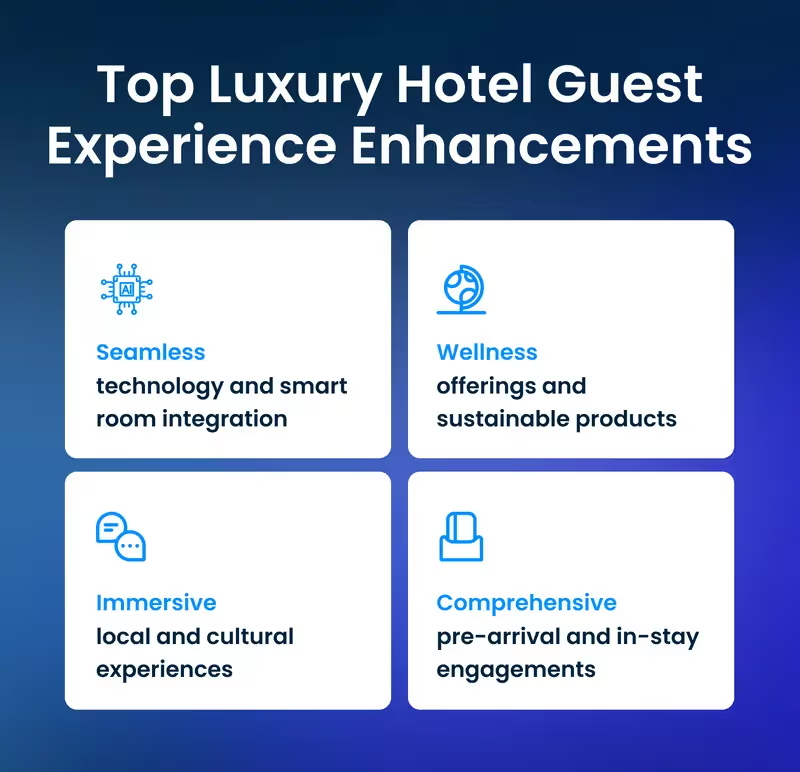
Top Luxury Hotel Guest Experience Enhancements that Improve Results
The most successful luxury hotels continuously reimagine and elevate the guest experience. They’re always asking themselves: What can we do to be even more thoughtful, responsive and one step ahead of our guests’ needs?
From tech-enabled arrivals to wellness-centered amenities, enhancements are about creating moments that resonate but also allow for operational efficiency.
Seamless Technology and Smart Room Integration
High-end guests expect effortlessness from the moment they arrive. In fact, 43% of luxury guests expect not to wait in lines, according to HotelTechReport.
Offering mobile check-in and smart checkout for smoother arrivals and departures
Reducing front desk friction so staff focus on welcoming guests
Capturing guest preferences before arrival, ensuring rooms feel personalized from the moment doors open
Wellness and Sustainability as Core Luxury Values
Nowadays, luxury guests not only want to maintain their health routines while traveling, they want opportunities to enhance them. More than 90% of high-end travelers want wellness experiences that support physical and mental health, according to a report by Luxury Travel Market (ILTM), Altiant and Hyatt.
Guests also want to keep traveling sustainably. According to the PwC 2024 Voice of Consumer Survey, 31% adjust travel habits for environmental reasons. Hotels can answer this call by:
Offering refillable bath products in sleek dispensers
Using water-saving fixtures and smart lighting
Sourcing locally, crafting seasonal menus and offering farm-to-table dining
Integrating carbon offset options or green certification initiatives
Immersive Local and Cultural Experiences
High-end guests seek the extraordinary, the personal and the experiences that cannot be replicated anywhere else. Whether it’s a private cooking class, a guided walk through hidden neighborhoods or an exclusive art immersion, these moments make the stay unforgettable.
With the support of AI-powered tools like AI guest messaging, properties can float offerings and start conversations by:
Recommending local excursions tailored to guest interests
Providing real-time guidance on events, dining and attractions
Offering curated content based on the guest’s profile, past preferences or booking type
Comprehensive Pre-Arrival and In-Stay Engagements
Pre-arrival communication sets the stage for an exceptional stay. Good examples build anticipation, gather preferences and subtly signal the level of care guests can expect. Once on property, in-stay messaging ensures guests feel supported without ever feeling overwhelmed.
With tools like Canary’s Guest Messaging, luxury hotels can design communication pathways that match their unique brand promise, such as:
Send pre-arrival messages that preview experiences and offer personalized upgrades
Offer real-time service during the visit without requiring a phone call
Check in mid-stay to surface and resolve any concerns early
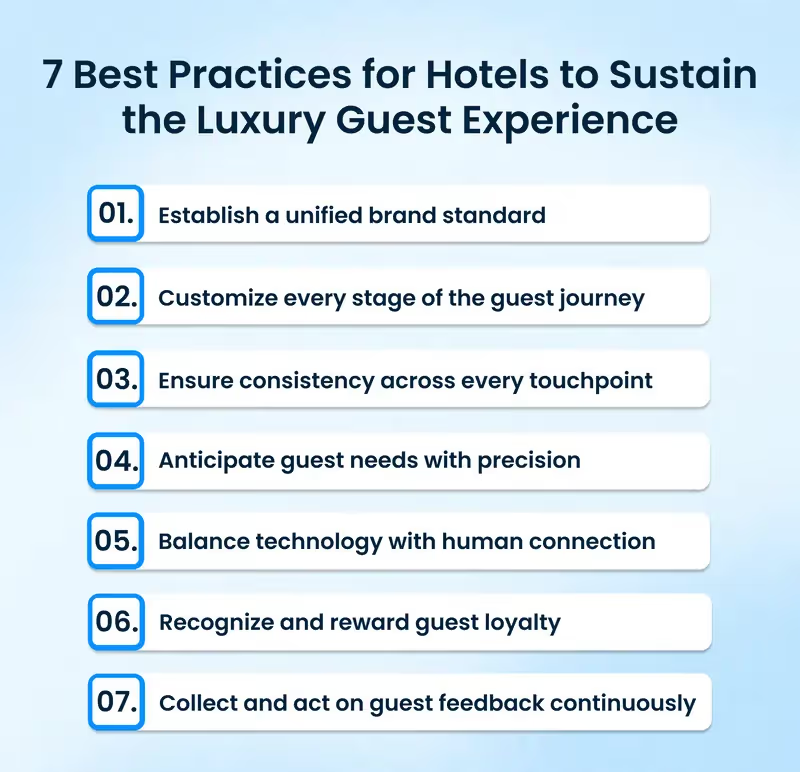
Luxury Guest Experience Tips: Best Practices for Hotels
Delivering luxury is an ongoing commitment that looks slightly different every day. A five-star reputation is built on systems that support consistency, anticipation and flexibility behind the scenes.
The following best practices help luxury hotels increase hotel guest satisfaction, foster loyalty and stay competitive in an experience-first market.
1. Establish a Unified Brand Standard
An exceptional luxury experience starts with clearly defined branding that guides every guest touchpoint across departments. Consistency reinforces your identity and builds trust with the most discerning returning guests.
To establish and sustain brand-wide excellence:
Develop a guest experience playbook for staff training and reference
Use internal audits and mystery guests to assess alignment
Give GMs the ability to adapt brand standards to reflect local context without compromising quality
2. Customize Every Stage of the Guest Journey
The most memorable luxury stays make guests feel genuinely known. Creating moments that reflect individual preferences, travel purpose, or past behavior shows attentiveness and elevates perceived value.
When every stage of the stay feels purposefully designed, guests leave with a sense of recognition that lingers (and are more likely they return). Best practices include:
Using subtle prompts in booking confirmations to understand travel purpose
Pre-arrival emails with curated recommendations
Tailored in-room amenities for special occasions or individual preferences
Personalized departure notes or follow-up emails that acknowledge the guest’s journey
3. Ensure Consistency Across Every Touchpoint
In luxury hospitality, a single inconsistency can break the spell. That’s why maintaining consistent standards across departments and channels is critical, particularly as technology becomes more embedded in operations.
AI steps up to support human service at scale, ensuring that every interaction feels equally polished, helpful and brand-aligned. With Canary AI, hotels can:
Automatically draft on-brand guest communications across languages and contexts
Generate service recovery messages to guests and service tickets to departments in real time to resolve issues swiftly
Maintain a consistent tone and messaging across staff, shifts and platforms
4. Anticipate Guest Needs with Precision
Guests who book luxury stays expect seamless support before they have to ask for it. Now, technology gives you a level of attentiveness that has never been more achievable.
Functional transactions are turned into memorable moments and strengthens brand loyalty. With tools like Canary’s Dynamic Upsells, properties can:
Recommend room upgrades or spa packages based on booking behavior
Trigger personalized offers automatically, boosting both satisfaction and revenue
Highlight seasonal experiences tailored to guest interests
5. Balance Technology with Human Connection
Luxury hotels take pride in doing everything impeccably, and their track records certainly prove that. Still, as guest expectations evolve, even the most storied properties benefit from embracing technology as a silent partner that elevates their art of hospitality.
The finest experiences happen when technology quietly manages the transactional, allowing staff to fully inhabit the relational. To strike that balance:
Use mobile check-in to eliminate front desk delays while offering a warm signature welcome
Automate service requests, then follow up with a genuine human touch
Provide staff with tools that reduce administrative tasks and increase face time with guests
6. Recognize and Reward Guest Loyalty
Loyalty is built on genuine recognition, which goes far deeper than points or tiers. Guests return to places where they feel remembered, appreciated and valued.
Creating a hotel loyalty program that reflects your property’s ethos means offering luxurious, emotionally resonant benefits. Effective approaches include:
Personal touches for returning guests (welcome back messages, preferred rooms)
Personal concierge services (early access to events, spa treatments or culinary offerings)
Curated thank-you gifts aligned with guest preferences
Annual gestures of acknowledgement, such as handwritten birthday notes or tailored celebration recognition
7. Collect and Act on Guest Feedback Continuously
Feedback in luxury hospitality often arrives in subtler forms than a rating or checkbox. A guest might remark that the music in the lounge felt a bit too lively for a late evening, or that they adored the lavender turn-down but prefer eucalyptus at home. Your team must be attuned to these comments, capturing notes after interactions and raising them during shift briefings.
To gather and use feedback with intention:
Be present to encourage and recognize real-time feedback during the stay and resolve concerns before they become memories
Use feedback trends to inform staff training and operational changes
Follow up with personalized responses when guests share concerns or compliments
Send personalized post-stay surveys via mobile or email
Offer the Best Personalized Luxury Hotel Experience with Canary
Luxury hospitality is the birthplace of true personalization: crafted by talented hoteliers who understood the magic of seeing, hearing and anticipating their guests. Today, delivering that same level of artistry at scale requires technology that enhances the human touch.
Canary’s all-in-one guest management software gives luxury hotels the opportunity to create unforgettable guest experiences across every phase of the journey. From the moment a booking is made to the final farewell, luxury hotels using Canary anticipate needs, respond instantly and delight guests at scale. With Canary, you can:
Offer frictionless check-in and checkout to eliminate front desk delays
Engage guests in real time with AI-powered messaging
Drive revenue and delight through personalized offers
Book a demo today and discover how to improve the guest experience in luxury hotels with AI-powered hospitality solutions from Canary.
Frequently Asked Questions
Which Luxury Hotel Chain Offers the Best Guest Experience?
Guest experience and luxury are ultimately subjective. What truly sets enduring luxury brands apart is not just flawless service delivery, but the emotional impression they leave behind. These properties combine thoughtful design, localized experiences and warm, intuitive service. Increasingly, they also integrate smart technologies to maintain seamless, personalized communication throughout the guest journey.
What Trends Are Shaping the Future of the Luxury Hotel Experience?
The future of luxury hospitality is being shaped by fusing high-touch service and high-tech support. Guests expect intuitive, meaningful interactions delivered with warmth, enhanced by modern innovation.
Luxury Hospitality Trend
What Guests Expect
What Hotels Must Deliver
AI-Driven Personalization
Experiences that feel tailored, not templated
Data-informed recommendations, proactive service and real-time responsiveness
Wellness-First Amenities
Support for physical and mental well-being
Thoughtful spa offerings, sleep optimization, fitness access and calm environments
Immersive Local Experiences
Authentic connections to the destination
Curated partnerships, local storytelling and culturally rooted programming
Sustainability with Substance
Responsible practices without sacrifice
Transparent sustainability efforts that don’t compromise comfort or quality
Contactless Convenience
Frictionless interactions on their terms
Mobile check-in, digital keys, messaging and on-demand service
Loyalty Beyond Points
Recognition, not just rewards
Personal acknowledgment, exclusive access and experiential benefits
How Do Hotels Measure and Personalize Luxury Guest Experience?
Hotels measure the luxury guest experience through a blend of quantitative metrics and qualitative insights. Key performance indicators like Net Promoter Score (NPS), online reviews and return guest rates offer baseline metrics.
To understand and elevate emotional satisfaction, luxury hotels also: